The Evenshore program · CBT-based · 8 weeks
Eight weeks. A clear path forward.
Short lessons and real-world exercises, built on CBT for tinnitus and shaped by how it affects your life.
- Extra focus areas where you need them
- A trained guide by your side on the Guided plan
30-day money-back guarantee · No questions asked
Built by Dmitry Kudinov. Tinnitus since 2021. Told to “just live with it,” but never how.Co-founded with Dr. Lev Brylev, MD, neurologist
- 8 weeks
- At your own pace
- 20–30 min a day
- Of learning and practice
- Online
- In your browser
- From $199
- One-time payment
Your program
Week 4 · now
Shifting focus
Practice directing your attention instead of repeatedly checking for tinnitus.
- Week 1, done
- Week 2, done
- Week 3, done
- Week 4, now, focus area added
- Week 5
- Week 6
- Week 7, focus area added
- Week 8
- Focus area added: Sleep, week 4
- Focus area added: Hearing, week 7
- Your guide reviewed week 3 and wrote back.
- 5 skills so far. Yours to keep.
- After week 8: your support plan
What you'll actually do
Short lessons. Real exercises. A clear next step.
About 20–30 minutes a day: a short lesson, an exercise, and a moment to look back.
- Watch. A short video explains one CBT skill for tinnitus and why it matters. Every video has subtitles.
- Practice. Follow the audio practice, then use the skill in your day.
- Reflect. Write down the thought behind a hard moment, then look at it again.
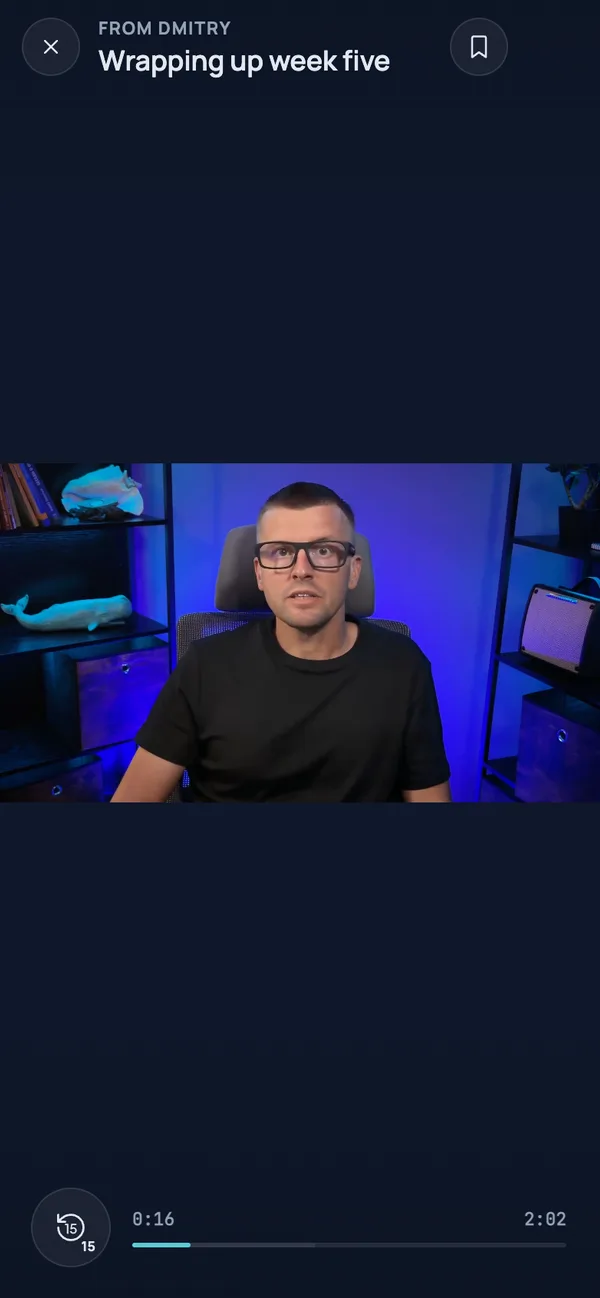
Short video lessons, some from Dmitry, our founder 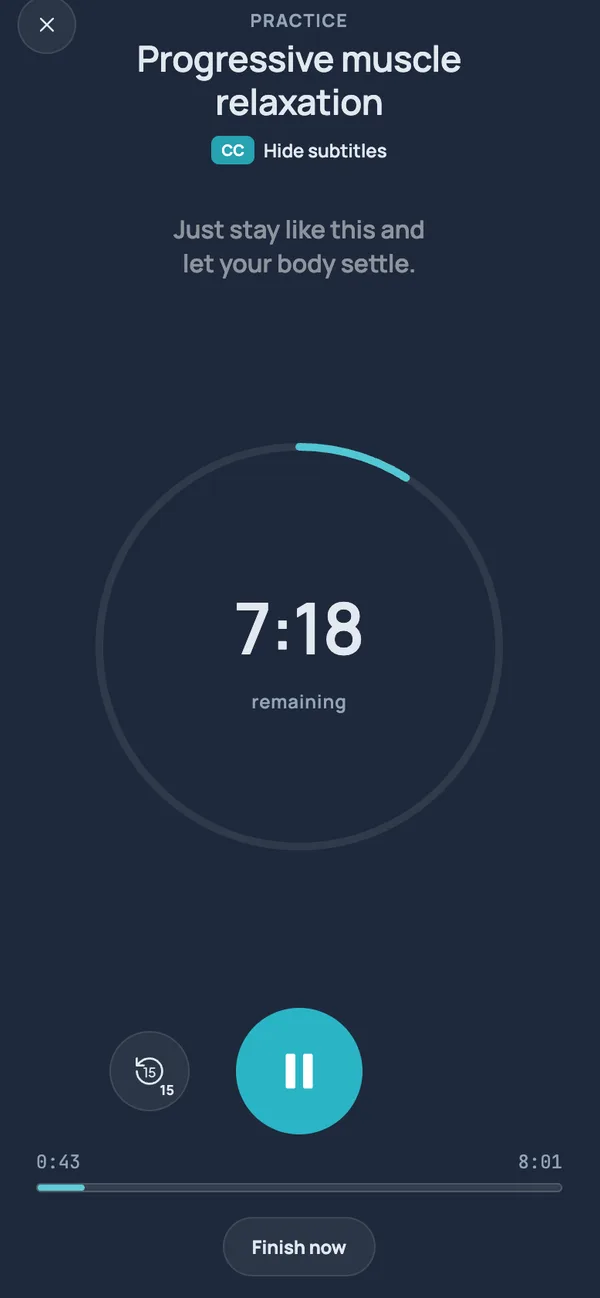
An audio practice, with subtitles 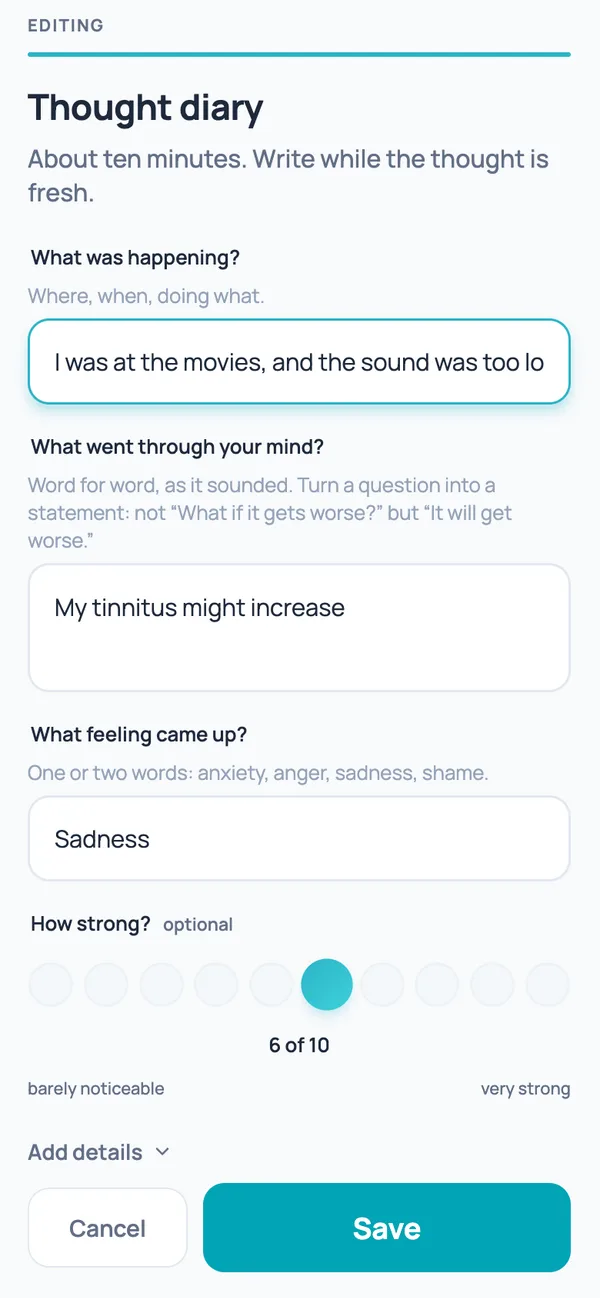
Your thought diary
Your eight-week journey
Eight weeks. One skill at a time.
Lessons build on one another. Your weekly path is structured, with extra focus areas added from your answers at the start.
Start
Begin where you are.
Your answers at the start add focus areas for sleep, concentration, everyday sounds or hearing.
Week 01
Your goal, and how to unclench
Set a concrete goal, explore the stress response, and begin practicing relaxation.
Week 02
A calm place and belly breathing
Build a relaxation routine you can return to when things feel overwhelming.
Week 03
A new look at the sound
Explore how the way you interpret tinnitus can affect your response.
Week 04
Shifting focus
Practice directing your attention instead of repeatedly checking for tinnitus.
Week 05
Thoughts and stress
Learn to recognize patterns that can make tinnitus feel more distressing.
Week 06
Talking back to your thoughts
Use CBT tools to examine and respond to difficult thinking patterns.
Week 07
Mindfulness in ordinary life
Practice using what you've learned in everyday situations.
Week 08
Facing the sound
Bring the skills together and build your personal support plan.
After week 8
The skills are yours to keep using.
You leave with your own full personal support plan to keep up what you've learned and keep building your skills, plus 12 months of access to the program and lighter maintenance material.
Inside the eight weeks
The skills at the heart of CBT for tinnitus.
Evenshore helps you work on how you react to the sound, with the main skills from CBT (cognitive behavioral therapy) that you build one step at a time.
Relaxation. Ways to bring stress down, wherever you are.
Step by step, you learn to let go of tension: first in a quiet room, then at work, in bed at night, and right in the middle of a stressful moment. By the end, you have several ways to bring stress down, whenever you need them. It's a skill you'll use far beyond tinnitus.
Attention. Put your focus where you want it.
Tinnitus is good at grabbing attention. These skills train you to place it where you need it: on your work, a conversation, a good book. You also practice moving your attention from one thing to another, so you can let go of the sound when you need to.
Thoughts. Answering the 3 a.m. thoughts.
Tinnitus often brings a stream of dark thoughts: “It'll only get worse.” “I'll never sleep again.” “What if this spike never ends?” Working with thoughts is the core of CBT. You learn to notice these thoughts, check them against the facts, and answer them. Over time, worrying thoughts can lose their grip, and the endless loop about tinnitus can slow down.
Mindfulness. Noticing the sound without fighting it.
Not another meditation app: in CBT for tinnitus, mindfulness is a skill with a job, trained step by step like the others. Mindfulness means paying calm, full attention to what's happening right now: in your body, your feelings, your thoughts. Distress pulls all your attention toward the sound. Mindfulness practice trains you to come back to what you're doing, who you're with, and what's around you.
How the sound can matter less
Your brain already knows how to stop noticing a sound.
Think of a clock ticking in a quiet room, or traffic outside: after a while, you stop hearing them. With tinnitus, stress and worry can make your brain treat the sound as a warning, so it keeps listening for it. When that alarm eases, your brain can learn that the sound doesn't need your attention, and you may notice it less.
Researchers call this habituation, a natural brain process that takes time. It doesn't always happen on its own, especially when stress keeps the alarm on. That's what the skills are for: they help ease the alarm, so habituation can happen.
On alert
Jaw tight, checking the sound again at 2 a.m. Your brain keeps listening for it.
Calmer
The sound is still there. It sits in the background while you read, work, or fall asleep.
A spike can switch the alarm back on. The same skills help you find calm again.
Being calmer helps it along. That's why the program starts with relaxation, then adds work on attention and thoughts.
Supplements need refills. Skills don't. Once you've learned them, they're yours to keep, long after the program ends.
Practiced together, these skills may help the sound bother you less. You also leave with a personal plan for harder days.
With Guided, a trained Evenshore guide reviews your practice every week and writes back, so you're not figuring it out alone. Self-paced is the same program, without a guide.
How the skills grow, week by week
Relaxation
From a long guided session to short pauses through the day and a one-minute pause when stress hits.
- Week 1: Progressive muscle relaxation
- Week 2: Belly breathing
- Week 3: Whole-body relaxation
- Week 4: Frequent relaxation
- Week 5: Stress relaxation
- Weeks 6–8: Your relaxation routine
Attention
From a calm mental image to a new way to hear the sound, and short, planned listening in week 8.
- Week 2: Positive image
- Week 3: New perspective
- Week 4: Attention switching
- Week 7: Everyday mindfulness
- Week 8: Tinnitus listening
Why listening comes last. By week 8 you've practiced calming your body and steering your attention, so you can listen to the sound briefly, on your own terms, with those skills ready.
Thoughts
From a thought diary to a calmer second look at the thoughts behind hard moments.
- Week 5: Thought diary
- Week 6: Thought review
- Weeks 7–8: Thought review, taken further
Focus areasOptional
Extra lessons for sleep, concentration, everyday sounds or hearing. You get only the ones your answers point to, each in its own week.
- Week 4: Sleep
- Week 5: Concentration
- Week 6: Everyday sounds
- Week 7: Hearing
Background soundFor everyone
From week 3, you learn to set up the sound around you for what you're doing: a steady background to focus, something soft to fall asleep to, something calm to rest. Kept low, just in the background. The skill is knowing what helps, and when.
Weeks 3–8
Relaxation
From a long guided session to short pauses through the day and a one-minute pause when stress hits.
- Week 1Progressive muscle relaxation
- Week 2Belly breathing
- Week 3Whole-body relaxation
- Week 4Frequent relaxation
- Week 5Stress relaxation
- Weeks 6–8Your relaxation routine
Attention
From a calm mental image to a new way to hear the sound, and short, planned listening in week 8.
- Week 2Positive image
- Week 3New perspective
- Week 4Attention switching
- Week 7Everyday mindfulness
- Week 8Tinnitus listening
Why listening comes last. By week 8 you've practiced calming your body and steering your attention, so you can listen to the sound briefly, on your own terms, with those skills ready.
Thoughts
From a thought diary to a calmer second look at the thoughts behind hard moments.
- Week 5Thought diary
- Weeks 6–8Thought reviewTaken further
Focus areasOptional
Extra lessons for sleep, concentration, everyday sounds or hearing. You get only the ones your answers point to, each in its own week.
- Week 4Sleep
- Week 5Concentration
- Week 6Everyday sounds
- Week 7Hearing
Background soundFor everyone
From week 3, you learn to set up the sound around you for what you're doing: a steady background to focus, something soft to fall asleep to, something calm to rest. Kept low, just in the background. The skill is knowing what helps, and when.
Personalized from the start
Same eight weeks. Extra focus areas where you need them.
At the start, you fill out the Tinnitus Functional Index (TFI), a questionnaire about how tinnitus affects your days. Where it gets in the way, a focus area is added inside your eight weeks. You can say no, or add one later.
How much it gets in the way, from your answers
Guided support · 8 weeks
If you get stuck or go quiet, someone notices.
With Guided, a trained Evenshore guide works with you for all 8 weeks. A real person, not a chatbot.
JAMA Otolaryngology · 2018
This is the format the research tested.
In a clinical trial, an 8-week online CBT program worked about as well as face-to-face tinnitus care. People didn't go through it alone. A guide supported them along the way.
JAMA study (opens in a new tab)What makes Guided different
A person who knows your progress.
Guides are Evenshore program specialists trained in our CBT-based approach, not therapists, and supervised by neurologist Dr. Lev Brylev, MD.
- If you go quiet, your guide writes first. A few missed days don't end the program.
- Three private 30-minute meetings with your guide. At the start, midway and at the end of the program.
- A weekly review of your exercises. With practical feedback.
- 8 weeks of guidance. Your guide is with you from the first lesson to the last, and helps you build your personal support plan for after week 8.
- Answers within 24 hours. On your exercises and the program. Medical questions stay with your doctor.
I understand the exercise when I watch the lesson, but I can't seem to use it during meetings.
You
I read your Week 4 reflection. You said meetings were particularly difficult. Let's try the same skill in a less demanding situation first. Which step feels hardest when you're at work?
Your guide
Illustrative exchange. Guides support the educational program, not diagnosis or psychotherapy.
Plans & pricing
One program. Two ways to feel supported.
The complete 8-week CBT-based program is included in both plans. Choose whether to practice independently or with an Evenshore guide.
One-time payment · No subscription · 30-day money-back guarantee
The same program, without a guide
Self-paced
$199one-time
The complete program, on your schedule. Follow the lessons, practice the exercises and work at your own pace.
- Full 8-week CBT-based program
- Extra focus areas from your answers
- Your personal support plan and skills library, plus 12 months of access
- Help with general program and account questions
The same program, with a trained guide
Guided
$399one-time
A real person helps you put the program into practice. Best if you've tried on your own before and found it hard to keep going.
- Everything in Self-paced
- Your guide writes first if you go quiet
- Three private 30-minute meetings with your guide: at the start, midway and at the end
- Weekly review of your exercises and practical feedback
- 8 weeks of guidance, for the full length of the program
- Answers within 24 hours, on your exercises and the program
Choose Guided — $399Who guides you?
Guides are Evenshore program specialists trained in our CBT-based approach, not therapists, and supervised by neurologist Dr. Lev Brylev, MD. Dmitry, our founder, is one of them: wait for a place with him, or start right away with another guide.
Compare exactly what's included
| Compare exactly what's included | Self-paced | Guided |
|---|---|---|
| Full 8-week CBT-based program | Included | Included |
| Extra focus areas from your answers | Included | Included |
| Personal support plan, skills library, 12 months of access | Included | Included |
| Help with general program and account questions | Included | Included |
| Weekly review of your exercises and feedback | Not included | Included |
| Private 30-minute meetings | Not included | 3 with your guide |
| Guidance period | Not included | 8 weeks |
| Questions answered by | Support team | Your guide, within 24 hours |
| Who guides you | Not included | A trained Evenshore guide |
30-day money-back guarantee
One-time payment on all plans · No subscription
The evidence behind the approach
What the research says about CBT for tinnitus.
Evenshore uses CBT-based skills. Research on CBT for tinnitus gives us a scientific foundation for the approach — not a guarantee of what any individual will experience.
US clinical guideline · 2026
CBT is recommended for adults with persistent, bothersome tinnitus.
AAO-HNSF guideline (opens in a new tab)JAMA Otolaryngology · 2018
An 8-week guided online CBT program worked about as well as usual face-to-face clinical care.
JAMA study (opens in a new tab)Cochrane review · 2020
A review of 28 trials found CBT may reduce how much tinnitus affects daily life.
Cochrane review (opens in a new tab)
These studies evaluated CBT interventions, not the Evenshore program itself. The program is educational and does not promise to remove tinnitus.
The people behind Evenshore
Built from lived experience. Shaped by medical expertise.
 Dmitry KudinovFounder · Living with tinnitus since 2021
 Dr. Lev Brylev, MDCo-founder · Neurologist · Chief Medical Officer
See a doctor first for certain symptoms.
New one-sided or pulsating tinnitus, sudden changes, sudden hearing loss, severe dizziness, or new neurological symptoms may require medical evaluation; sudden hearing loss needs urgent assessment.
Frequently asked questions
Good questions. Clear answers.
Who is an Evenshore guide?
A real person: an Evenshore program specialist trained in our CBT-based approach and supervised by neurologist Dr. Lev Brylev, MD. Not a therapist: no diagnosis, no medical advice. Your guide reads your weekly check-in, notices where you're stuck and writes back. If you go quiet, your guide writes first.
Can Dmitry be my guide?
Yes. Dmitry built Evenshore and has lived with tinnitus since 2021. He guides up to 15 people at a time, so you can wait for a place with him, and your program starts then. We'll tell you when a place opens, usually within 1 to 2 weeks. Or start right away with another guide, trained and certified by Evenshore. The price and what's included are the same with every guide, and your guide stays with you for the whole program. The 30-day money-back guarantee starts when your program does.
How do I contact my guide, and how fast will they answer?
Write in the chat inside the program, any time; it isn't a live chat. Your guide answers questions about your exercises and the program within 24 hours.
What happens in the three Guided meetings?
Three private 30-minute video calls with your guide. At the start, you talk through your situation, what you want from the program and how you'll work together. Midway, you look at how your practice is going and adjust what isn't working. At the end, you look back at your practice and make a plan to keep using the techniques. None of the meetings is therapy or a medical appointment.
Does Guided include medical or psychological treatment?
No. What Guided adds is a real person for the program: a guide trained in our CBT-based approach, who reviews your exercises every week and answers within 24 hours. It isn't therapy or counseling, diagnosis, medical advice or crisis help. If you're in crisis right now, call or text 988 in the US, or call 911.
Can I switch from Self-paced to Guided halfway through?
Write to us at hello@evenshore.com, and we'll work out the best way to add a guide from where you are.
How much time do I need? And what if sleep is my main concern?
About 20–30 minutes a day. Week 4 is the busiest, week 7 the lightest.
If sleep is your main concern, your answers at the start can add the sleep focus area in week 4, alongside the core lessons.
Will Evenshore make my tinnitus go away?
The sound itself, no. No one can honestly promise that; the US guideline tells doctors to say plainly there's no cure. But how much it runs your life can change, even when the sound doesn't. Evenshore teaches the skills of CBT: relaxing on purpose, shifting attention, changing how you react to the sound. In studies of CBT, people were on average much less bothered by tinnitus, and about half had a clear improvement in daily life.
Has Evenshore itself been tested in a clinical trial?
Not yet. Evenshore is built on CBT for tinnitus, which the US guideline recommends. A review of 28 trials found CBT may reduce how much tinnitus affects daily life. Those studies tested CBT programs, not Evenshore itself.
Is it a subscription? What if it isn't right for me?
No subscription: you pay once. If it isn't right for you, write to hello@evenshore.com within 30 days of starting the program and we refund the payment in full, on either plan, no questions asked.
Do I need to see a doctor first?
You don't need a formal diagnosis to start. We do strongly suggest that a doctor or audiologist has checked your ears and hearing, and our sign-up asks a few safety questions. If you're waiting for an appointment, start while you wait, not instead of it.
Is it covered by insurance or Medicare?
Insurance and Medicare don't cover it: Evenshore is a wellness program, not medical care, so there's nothing to bill. For HSA or FSA, ask us and we'll tell you what we know.
I have hearing loss. Can I follow the lessons?
Yes. Every video lesson has captions, and the audio practices have subtitles too. The US guideline recommends hearing aids for hearing loss, and CBT works alongside them.
Two good next steps
Choose a plan — or start with Dmitry's story.
Ready to begin? Compare the two plans and choose the support that fits you.
One-time payment · 30-day money-back guarantee
Or, if you're not ready yet
Start with Dmitry's 5-minute exercise.
Get the short exercise he uses when tinnitus feels loudest, by email.